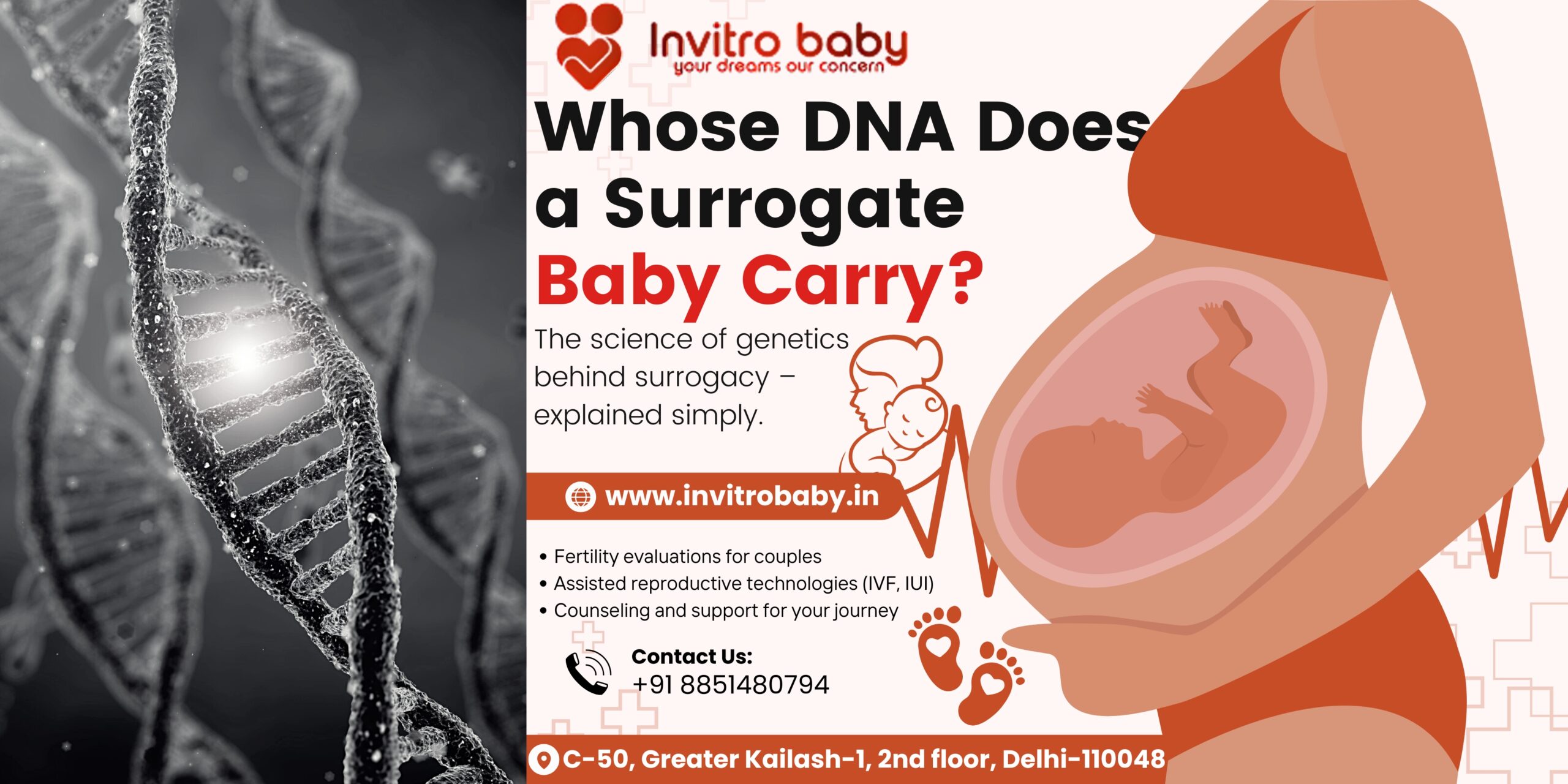
Surrogacy has opened new doors for aspiring parents facing challenges in conceiving naturally. However, one of the most common questions people ask is about the genetics involved. Whose DNA does a surrogate baby have? To understand this, it is important to explore the science behind surrogacy and how it influences the baby’s genetic makeup.
Genetic Contribution in Surrogacy
There are two main types of surrogacy, each with its own implications for the baby’s DNA.
- Traditional Surrogacy
With traditional surrogacy, the surrogate uses her own egg, so she is not only the one who carries the baby but also shares a genetic link with the child. Sperm from the intended father or a donor fertilizes the egg. As a result, the surrogate contributes 50 percent of the baby’s DNA. - Gestational Surrogacy
In gestational surrogacy, the surrogate carries a baby created through IVF using an egg and sperm from the intended parents or donors. The surrogate has no genetic link to the baby in this case. She is only the carrier. This form of surrogacy is more common today, especially at advanced fertility clinics like the Best Surrogacy Centre in Delhi.
Modern Preference for Gestational Surrogacy
Gestational surrogacy is preferred because it eliminates legal and emotional complexities related to genetic ties between the surrogate and the baby. In this arrangement, the child’s DNA comes from the individuals who provided the egg and sperm.
The intended mother if her egg is used
- The intended father if his sperm is used
- Egg and sperm donors if the intended parents are unable to provide either
This makes it possible for same-sex couples, single parents and individuals with medical conditions to have children with the help of a surrogate.
Role of IVF in Determining Genetics
In-vitro fertilization (IVF) is the process that enables gestational surrogacy. Specialists carry out fertilization outside the body by combining the egg and sperm in a controlled lab environment. After the embryo is created in the lab, it is carefully implanted into the surrogate’s womb to begin the pregnancy. This approach ensures the baby’s genetic traits come solely from the egg and sperm sources, not the surrogate.
Choosing the Best Surrogacy Centre in Delhi
Couples who want a clear understanding of the genetics involved and legal guidance should consider working with the Best Surrogacy Centre in Delhi. These centers offer comprehensive medical support, legal assistance and psychological counseling for all parties involved.
This medical process enables fertility experts to create an embryo outside the body by combining an egg and sperm in a laboratory setting. When the embryo has developed sufficiently, it is transferred into the surrogate’s uterus to begin the pregnancy journey. As a result, the child’s DNA comes solely from the individuals who provided the egg and sperm not from the surrogate who carries the pregnancy. This clarity helps intended parents confidently pursue their dream of having an Invitro Baby with the support of modern science and expert care.