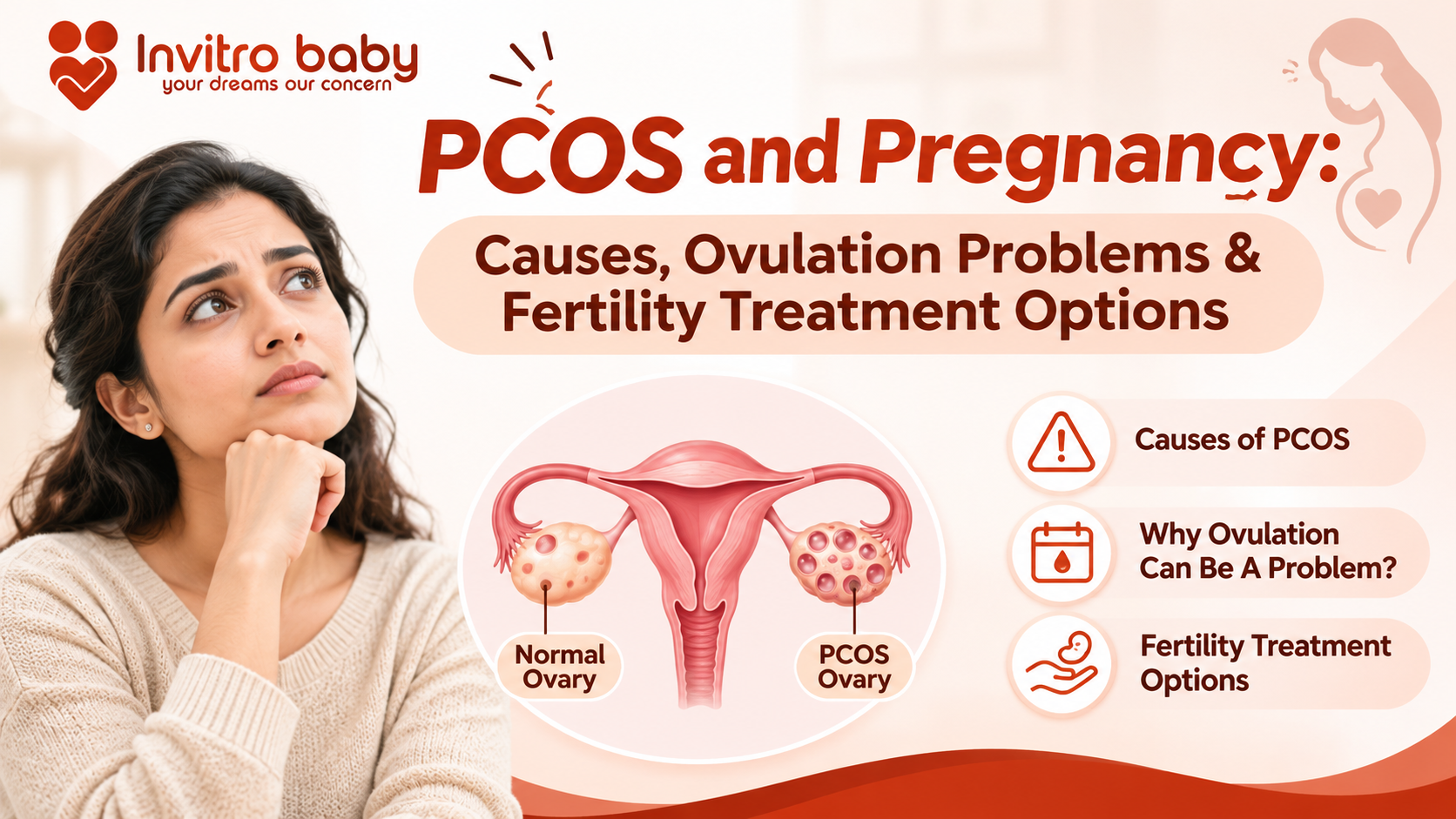
Many women diagnosed with PCOS and infertility worry about their chances of pregnancy. Questions such as Can I get pregnant with PCOS?, Does PCOS affect ovulation?, and What is the best PCOS fertility treatment? are common concerns among women planning a pregnancy.
The good news is that PCOS does not automatically mean infertility. Many women with PCOS conceive naturally, while others may benefit from medical treatment to support ovulation and improve their chances of pregnancy.
Understanding the relationship between PCOS, ovulation problems and pregnancy can help women make informed decisions about their reproductive health.
In this guide, we will explain the causes of PCOS, its symptoms, how it affects ovulation, available fertility treatment options and when to consult a fertility specialist.
What Is PCOS (Polycystic Ovary Syndrome)?
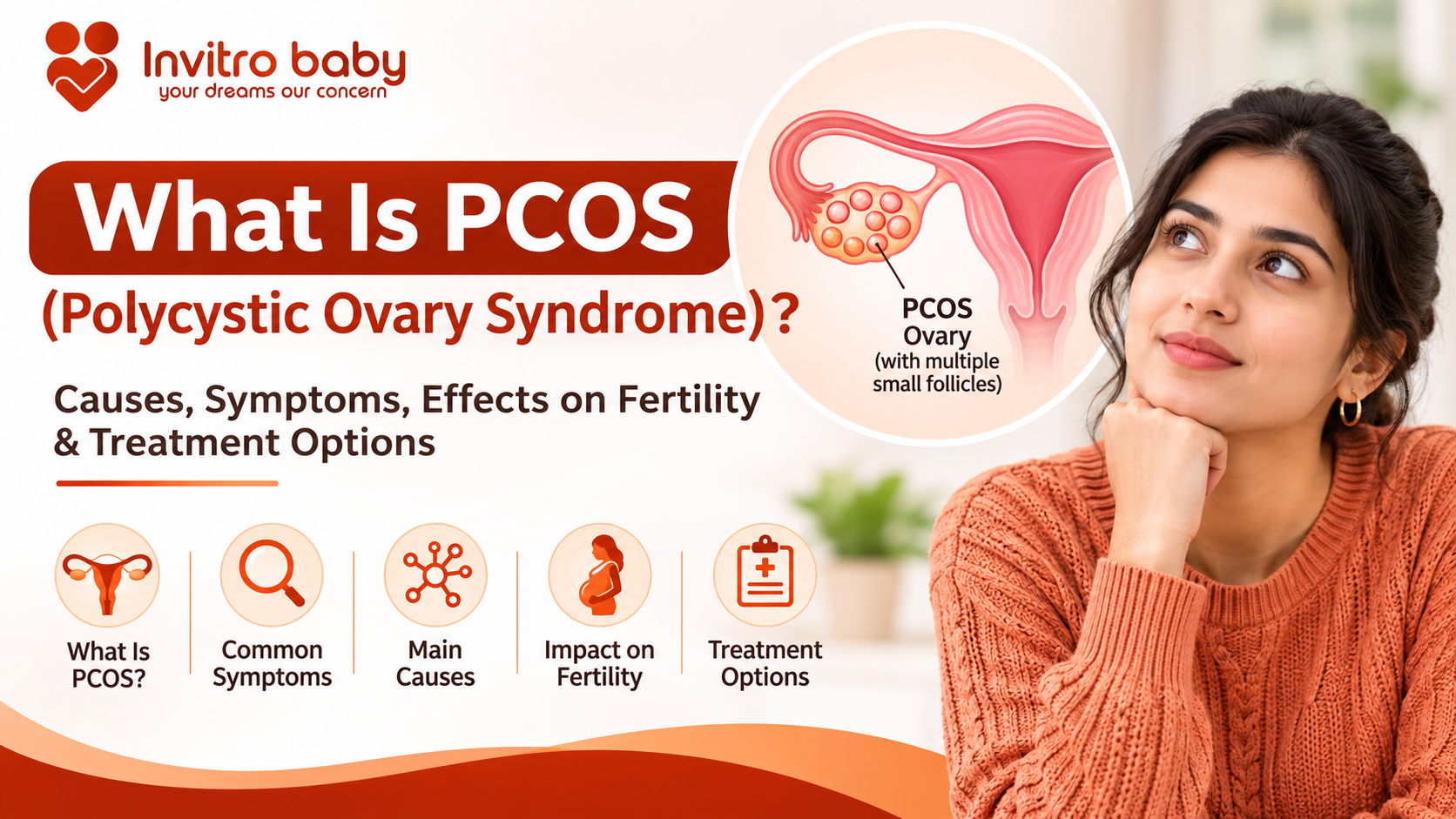
Polycystic Ovary Syndrome (PCOS) is a hormonal condition that can affect the ovaries, menstrual cycle, metabolism and reproductive health.
Women with PCOS may experience irregular menstrual periods, increased androgen levels, acne, excess facial or body hair and difficulties with ovulation.
PCOS is one of the common causes of ovulatory infertility, which means difficulty getting pregnant because ovulation does not happen regularly or may not occur.
However, PCOS affects every woman differently. Some women have regular ovulation and conceive naturally, while others may require fertility evaluation and treatment.
Common features of PCOS
-
Irregular periods: Menstrual cycles may be irregular, infrequent or absent.
-
Ovulation problems: Eggs may not be released regularly.
-
Hormonal imbalance: Androgen levels may be elevated.
-
Acne and excess hair growth: Some women experience symptoms related to increased androgen activity.
-
Metabolic changes: Insulin resistance and blood sugar abnormalities may occur in some women.
PCOS is a complex condition involving reproductive, metabolic and psychological health. A proper medical assessment is important to understand its impact on an individual’s fertility.
How Does PCOS Affect Pregnancy?
The relationship between PCOS and pregnancy is mainly influenced by ovulation, hormonal regulation and other individual fertility factors.
During a normal menstrual cycle, an ovarian follicle develops and releases a mature egg through ovulation. If sperm fertilises the egg and the embryo develops and implants successfully, pregnancy may occur.
In women with PCOS, hormonal changes can interfere with normal follicular development and ovulation.
How PCOS may affect fertility
-
Irregular ovulation: Ovulation may occur less frequently than expected.
-
Anovulation: Some women may not release an egg during a menstrual cycle.
-
Irregular menstrual cycles: Periods may be delayed or absent.
-
Hormonal changes: Elevated androgen levels may contribute to reproductive symptoms.
-
Insulin resistance: Metabolic changes may influence hormonal function in some women.
When ovulation is irregular, predicting the fertile window can become difficult. This may reduce the opportunities for natural conception.
However, women with PCOS can still become pregnant naturally or with appropriate fertility treatment, depending on their individual circumstances.
PCOS is not the only possible cause of infertility. A fertility assessment may also consider sperm health, fallopian tube function, age and other reproductive factors.
What Are the Common Causes of PCOS?
The exact cause of Polycystic Ovary Syndrome (PCOS) is not fully understood. Research suggests that several hormonal, genetic and metabolic factors may contribute to its development.
1. Hormonal Imbalance
Women with PCOS may have increased androgen levels, sometimes referred to as higher levels of male-type hormones.
This may contribute to:
-
Irregular menstrual cycles
-
Acne and excess facial hair
-
Disrupted follicular development
-
Difficulty with regular ovulation
Hormonal changes can affect how the ovaries function and may contribute to PCOS-related ovulation problems.
2. Insulin Resistance
Insulin resistance and PCOS are closely associated in many women.
Insulin helps the body regulate blood glucose levels. When the body becomes less responsive to insulin, the pancreas may produce more insulin to compensate.
Higher insulin levels may contribute to increased androgen production and affect normal ovarian function.
However, insulin resistance is not present in every woman with PCOS, and PCOS can occur in women of different body sizes.
3. Genetic Factors
PCOS may run in families.
Women who have a mother or sister with PCOS may have an increased likelihood of developing the condition.
However, family history alone does not determine whether someone will develop PCOS.
4. Metabolic Factors
Some women with PCOS may experience:
-
Increased risk of impaired glucose tolerance
-
Changes in cholesterol levels
-
Higher risk of developing type 2 diabetes
-
Metabolic syndrome
These factors are important because PCOS affects more than reproductive health.
A complete evaluation may include assessment of blood pressure, blood glucose and other metabolic risk factors.
PCOS Symptoms: When Should You Be Concerned?
The symptoms of PCOS can vary from one woman to another.
Some women may experience several symptoms, while others may have only a few.
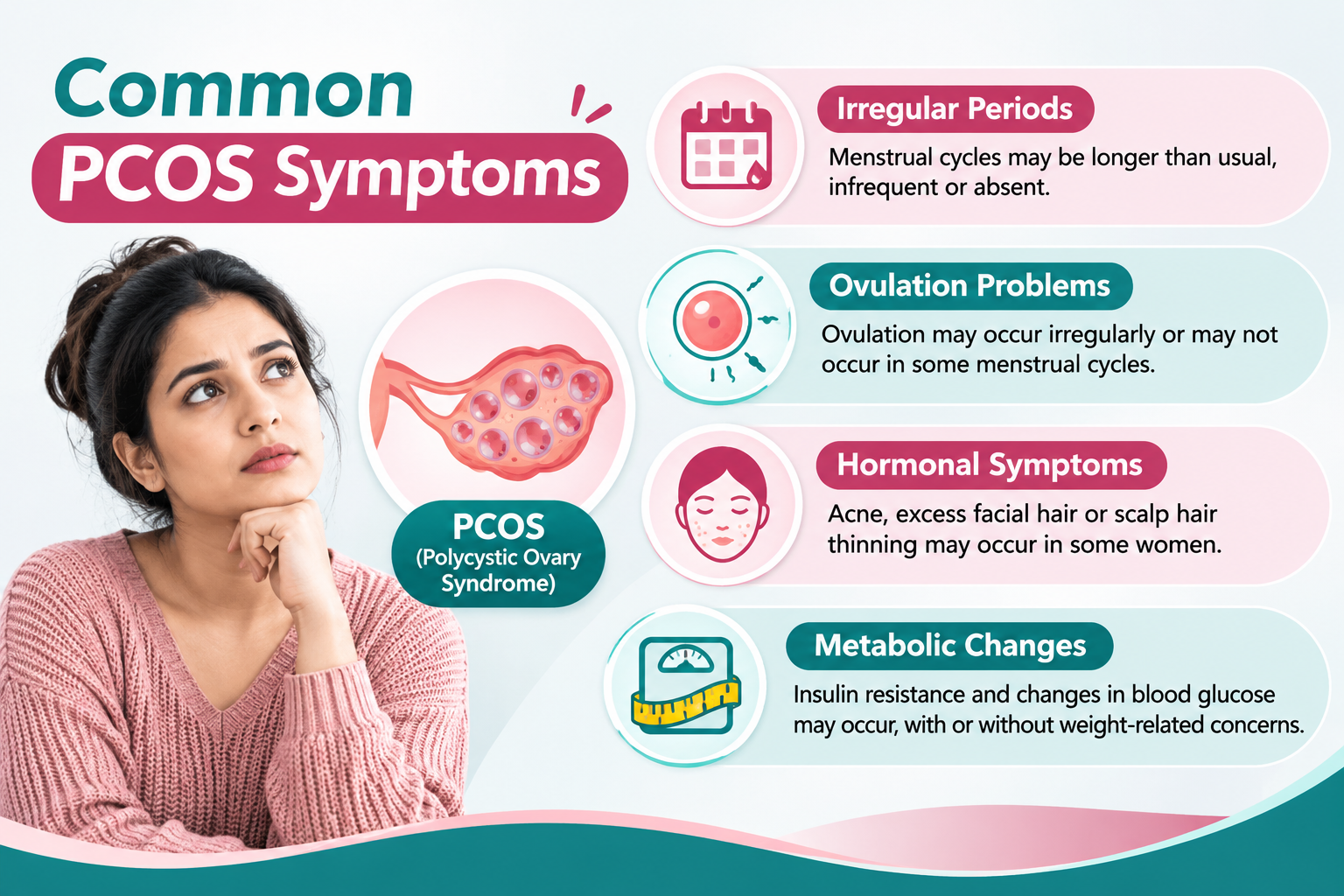
Insulin resistance and changes in blood glucose may occur, with or without weight-related concerns.
Important: PCOS cannot be diagnosed based on symptoms alone. Similar symptoms may occur with other hormonal conditions, so medical evaluation is important.
Can You Get Pregnant with PCOS?
Yes, pregnancy is possible with PCOS.
Many women with PCOS conceive naturally. Others may require treatment to help regulate ovulation.
The chances of pregnancy depend on several individual factors, including:
-
Age
-
Whether ovulation occurs regularly
-
Ovarian function
-
Sperm health
-
Fallopian tube function
-
Other reproductive or medical conditions
Women with PCOS who have irregular ovulation may benefit from fertility evaluation and treatment.
Can PCOS cause infertility?
PCOS can contribute to infertility when ovulation is irregular or absent.
However, PCOS-related infertility is often treatable, and medical options are available to help women who are experiencing difficulty conceiving.
Treatment should be selected based on the cause of infertility and the patient’s individual medical assessment.
The 2023 international PCOS guideline recommends evidence-based fertility management and recognises that pregnancy can often be achieved naturally or with assistance.
PCOS and Ovulation Problems: What Happens Inside the Ovaries?
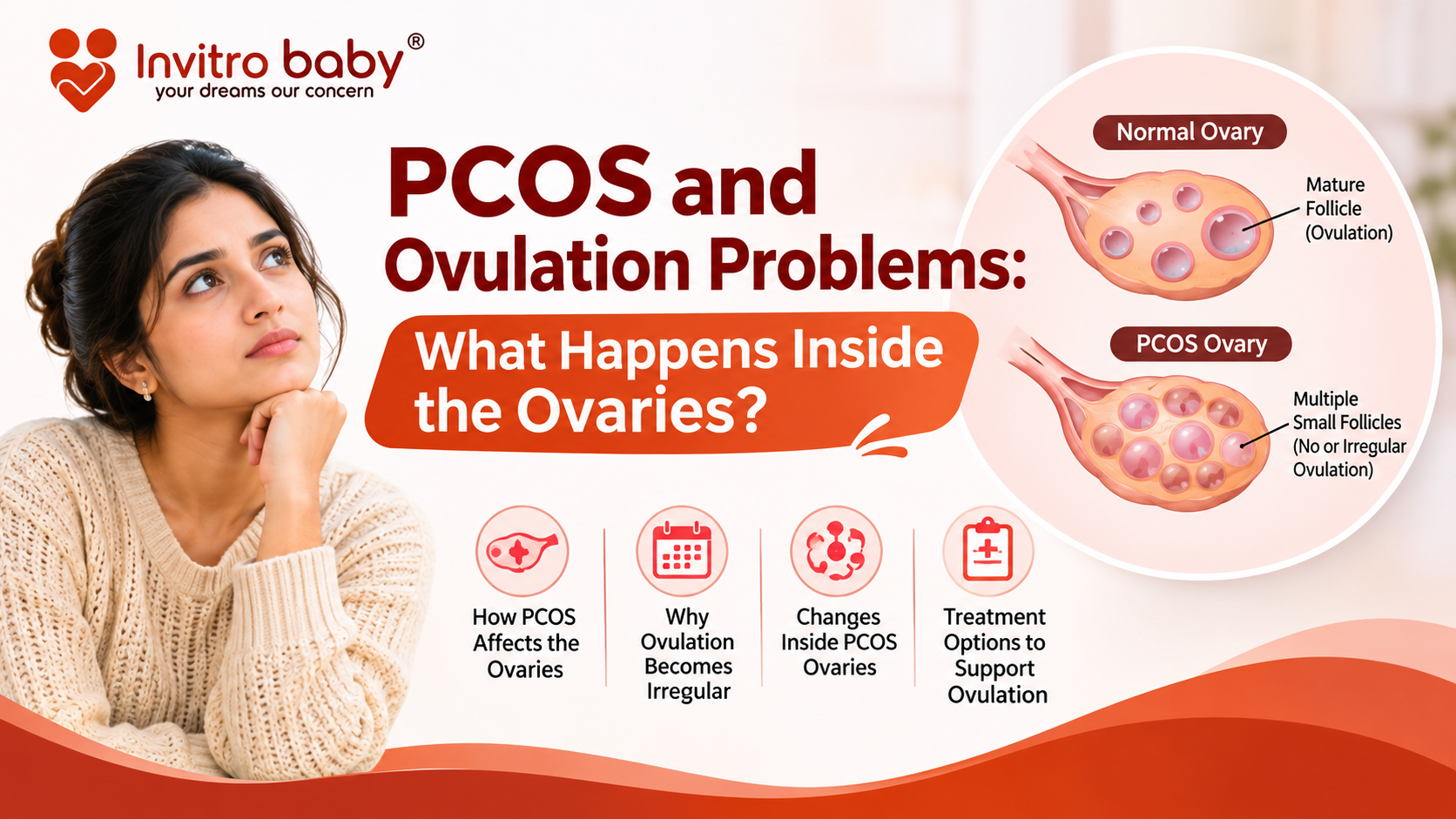
Ovulation is the process in which a mature egg is released from the ovary.
In women with PCOS, hormonal changes may interfere with the normal development of ovarian follicles.
How ovulation problems may develop
-
Follicular development: Several follicles may begin developing in the ovaries.
-
Hormonal changes: Altered hormone signalling may affect follicle maturation.
-
Delayed ovulation: The dominant follicle may not develop or release an egg at the expected time.
-
Irregular periods: Menstrual cycles may become longer or less predictable.
-
Difficulty conceiving: Less frequent ovulation may reduce the number of opportunities for natural conception.
The small follicles sometimes seen on ultrasound are not necessarily harmful cysts. They represent follicles at different stages of development.
Polycystic ovarian morphology on ultrasound does not automatically mean a woman has PCOS. Diagnosis requires consideration of the complete clinical picture.
How Is PCOS Diagnosed?
A PCOS diagnosis requires medical evaluation rather than relying on a single blood test or ultrasound report.
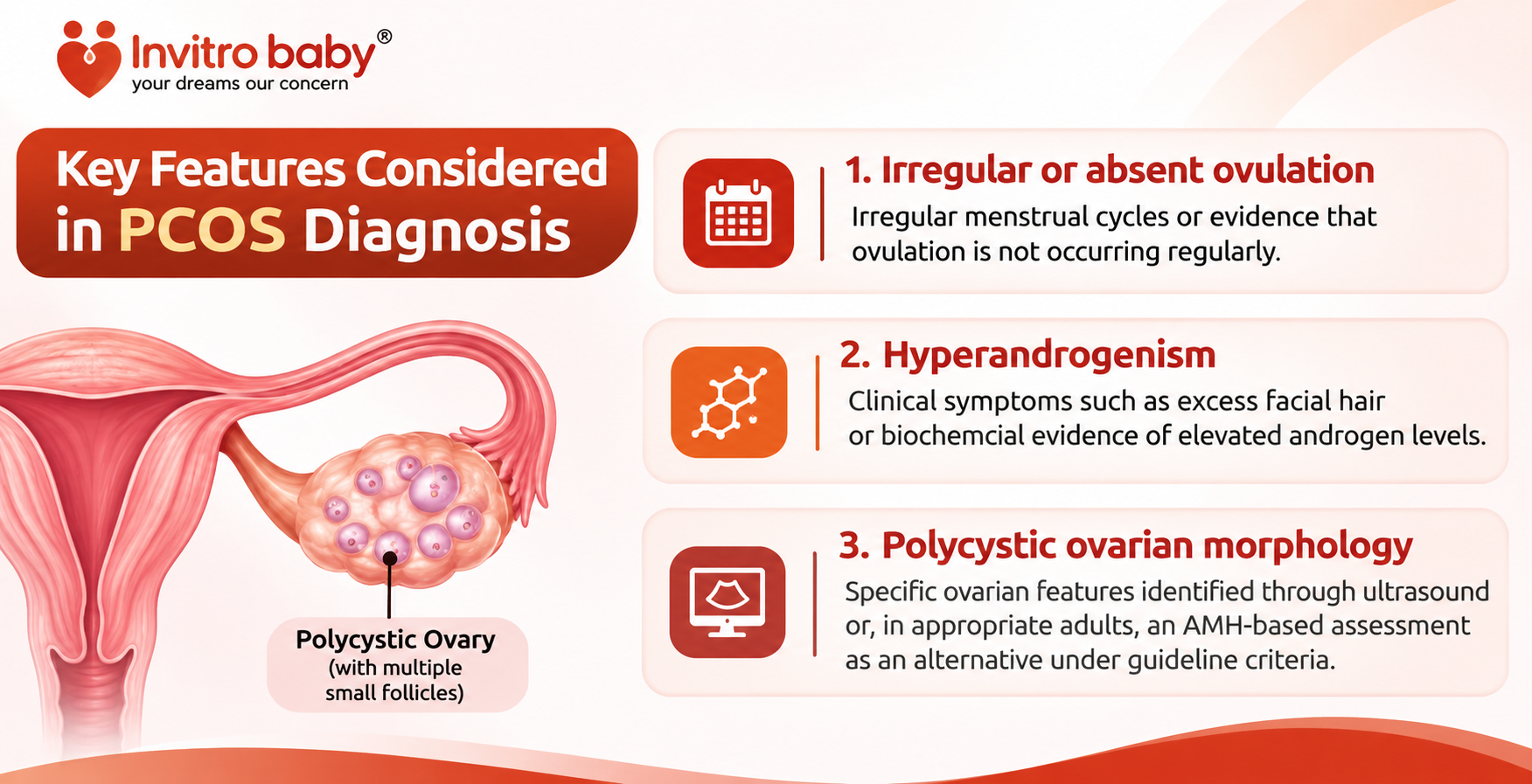
For adults, international diagnostic guidance generally uses the presence of at least two of the following three features, after excluding other possible causes:
Tests that may be recommended
Depending on the symptoms and medical history, a specialist may recommend:
-
Hormonal blood tests: To evaluate androgen levels and other relevant hormones.
-
Pelvic ultrasound: To assess ovarian appearance and other pelvic structures.
-
AMH testing: May be used in selected adult diagnostic pathways, but is not a standalone PCOS test.
-
Blood glucose assessment: To evaluate metabolic health.
-
Thyroid and prolactin tests: To investigate other possible causes of menstrual irregularities.
-
Fertility assessment: May include evaluation of ovulation, fallopian tubes and partner’s sperm health.
Not every patient requires every test.
The diagnostic approach should be individualised according to symptoms, age and reproductive goals.
PCOS Fertility Treatment Options
The treatment of PCOS and infertility depends on whether the patient is trying to conceive, whether ovulation occurs and whether other fertility factors are present.
There is no single treatment that is suitable for every woman with PCOS.
1. Lifestyle Management
Healthy lifestyle habits are an important part of PCOS management.
A specialist may recommend:
-
Balanced and nutritious eating habits
-
Regular physical activity
-
Appropriate sleep
-
Management of metabolic risk factors
-
Individualised weight management when clinically appropriate
Lifestyle management may improve metabolic health and menstrual function in some women.
However, PCOS is not simply a weight-related condition, and treatment should not involve weight stigma.
2. Ovulation Induction Treatment
For women with PCOS-related infertility due to anovulation, ovulation induction may be recommended.
The goal is to support the development and release of an egg.
Commonly discussed medications include:
-
Letrozole: An oral medication used to induce ovulation.
-
Clomiphene citrate: Another medication used to stimulate ovulation.
-
Metformin: May be considered in selected patients, particularly when metabolic factors are relevant.
-
Gonadotrophins: Injectable medications that may be used in selected cases under specialist monitoring.
Medication selection depends on medical history, other fertility factors, local prescribing requirements and individual treatment goals.
The 2025 WHO infertility guideline suggests letrozole as the preferred option over clomiphene citrate or metformin alone for infertility due to PCOS-related ovulatory dysfunction, while acknowledging the evidence limitations and local regulatory considerations.
Important: Fertility medicines should only be used under medical supervision. Do not start ovulation-induction medication on your own.
3. IUI Treatment
Intrauterine Insemination (IUI) may be considered for selected patients depending on their fertility evaluation.
During IUI:
-
Ovulation may be monitored.
-
Sperm is prepared in a laboratory.
-
Prepared sperm is placed inside the uterus around the time of ovulation.
IUI may be suitable in certain circumstances, but it is not automatically recommended for every woman with PCOS.
The decision depends on ovulation, sperm parameters, fallopian tube function and other fertility factors.
4. IVF Treatment
In Vitro Fertilisation (IVF) may be considered when other treatments have not been successful or when additional fertility factors are present.
During IVF:
-
Ovarian stimulation is performed under medical supervision.
-
Eggs are collected from the ovaries.
-
Eggs are fertilised with sperm in the laboratory.
-
Embryos are monitored for development.
-
An embryo may be transferred to the uterus.
IVF treatment may be an option for selected women with PCOS-related infertility.
However, PCOS does not automatically mean that IVF is required.
The treatment approach should be selected according to individual circumstances and the complete fertility evaluation.
The WHO 2025 guideline recommends considering IVF for PCOS-related ovulatory infertility when appropriate pharmacological treatments have not been successful.
PCOS and Pregnancy: Important Things to Know Before Conceiving
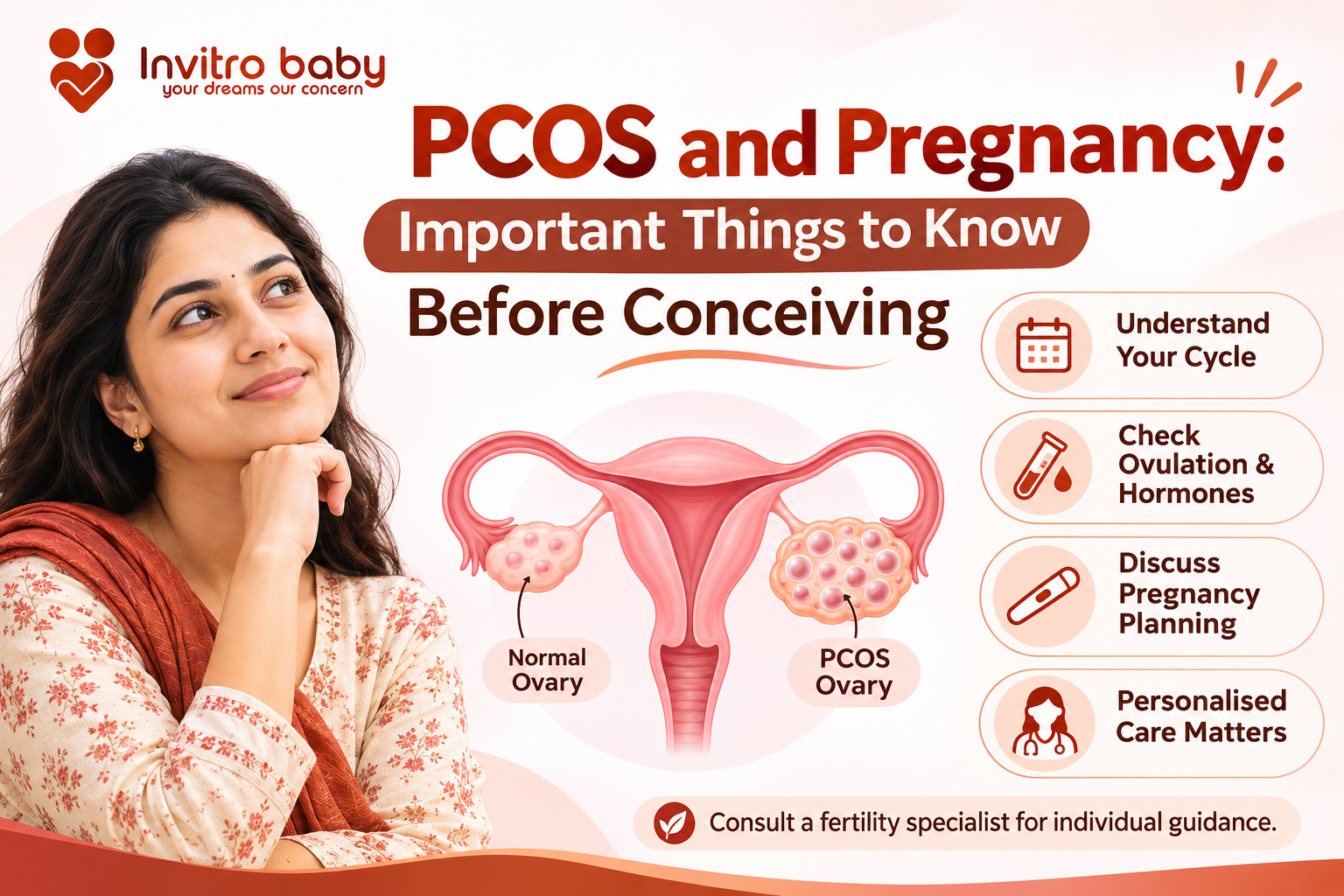
Women with PCOS who are planning pregnancy should consider preconception care.
A fertility specialist may recommend evaluating:
-
Ovulation: Whether eggs are released regularly.
-
Blood glucose: To identify diabetes or glucose intolerance.
-
Blood pressure: To assess cardiovascular health.
-
Thyroid function: If clinically indicated.
-
Fertility factors: Including sperm health and fallopian tube function.
-
Medications: To review whether current medicines are appropriate before pregnancy.
Taking a prenatal vitamin containing folic acid before pregnancy is generally recommended. The appropriate dose should be discussed with a healthcare professional, particularly if there are additional medical risk factors.
Does PCOS increase pregnancy complications?
Women with PCOS may have an increased risk of certain pregnancy complications, including:
-
Gestational diabetes
-
High blood pressure during pregnancy
-
Preeclampsia
-
Pregnancy-related metabolic complications
However, having PCOS does not mean that these complications will definitely occur.
Preconception assessment, appropriate pregnancy monitoring and management of existing medical conditions can help support maternal health.
The international PCOS guideline highlights the importance of recognising metabolic risk factors and pregnancy-related risks while providing individualised care.
PCOS and Pregnancy: Frequently Asked Questions
1. Can I get pregnant naturally with PCOS?
Yes. Many women with PCOS conceive naturally. Pregnancy depends on ovulation and other individual fertility factors. Women experiencing irregular ovulation may benefit from medical evaluation.
2. Does PCOS mean I cannot have a baby?
No. PCOS does not automatically cause infertility. Some women conceive without treatment, while others may need ovulation induction or additional fertility treatment.
3. Can PCOS cause irregular periods?
Yes. Hormonal changes associated with PCOS may affect ovulation and menstrual cycle regularity. However, irregular periods can also have other causes.
4. What is the first treatment for PCOS-related infertility?
Treatment depends on the individual’s diagnosis. For women with anovulatory infertility due to PCOS and no other infertility factors, letrozole is recommended as a first-line ovulation-induction medication in international guidelines.
5. Is IVF necessary for every woman with PCOS?
No. IVF is not necessary for every woman with PCOS. Depending on the fertility evaluation, natural conception, ovulation induction or other treatments may be considered.
6. Can PCOS affect pregnancy after conception?
PCOS may be associated with increased pregnancy-related metabolic and blood pressure risks. Appropriate prenatal care and monitoring are important.
7. When should I consult a fertility specialist if I have PCOS?
Consider consultation if you have irregular or absent periods, difficulty predicting ovulation, known reproductive concerns or difficulty conceiving. Women with irregular cycles may benefit from earlier evaluation rather than waiting for a full year.
When Should You Consult a Fertility Specialist?
Consider consulting a fertility specialist if:
-
You have irregular or absent menstrual periods.
-
You have been diagnosed with PCOS and are planning pregnancy.
-
You are experiencing difficulty conceiving.
-
You have concerns about ovulation.
-
You have a history of reproductive or hormonal conditions.
-
You have questions about fertility treatment options.
A specialist can help identify the possible cause of fertility difficulties and discuss appropriate treatment options.
Early evaluation may be particularly useful when menstrual cycles are irregular or when additional fertility factors are suspected.
Conclusion: PCOS Does Not Mean Pregnancy Is Impossible
PCOS and pregnancy are closely connected through hormonal balance, ovulation and reproductive health.
Although PCOS may cause irregular ovulation and contribute to infertility, many women with PCOS can achieve pregnancy naturally or with appropriate medical treatment.
Understanding PCOS symptoms, ovulation problems, fertility evaluation and available treatment options can help women make informed decisions about their reproductive health.
The most important step is to seek individualised medical guidance rather than relying on symptoms, online advice or self-medication.
At Invitro Baby Fertility Centre, women can discuss their fertility concerns, understand their medical evaluation and explore treatment options with a fertility specialist.