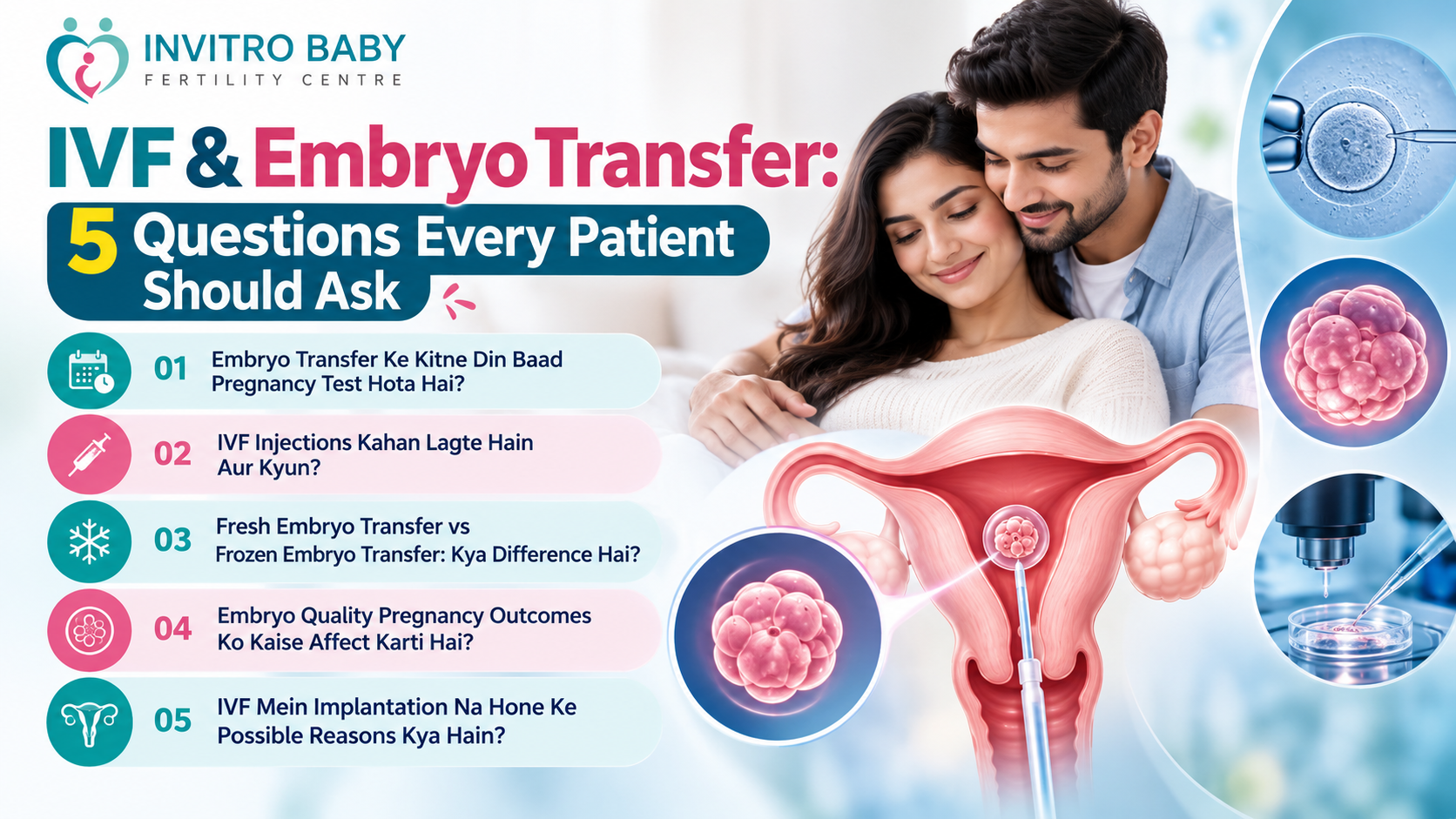
IVF and embryo transfer are important stages of fertility treatment that can bring patients closer to their goal of parenthood. However, many patients have questions about what happens during an embryo transfer, when to take a pregnancy test, how IVF injections work, and what factors may influence implantation.
Understanding these steps can help patients feel more informed, prepare for consultations, and make decisions with their fertility specialist.
In this guide, we answer five commonly asked questions about IVF treatment, embryo transfer, embryo quality, and implantation failure in simple, easy-to-understand language.
What Is IVF and How Does Embryo Transfer Work?
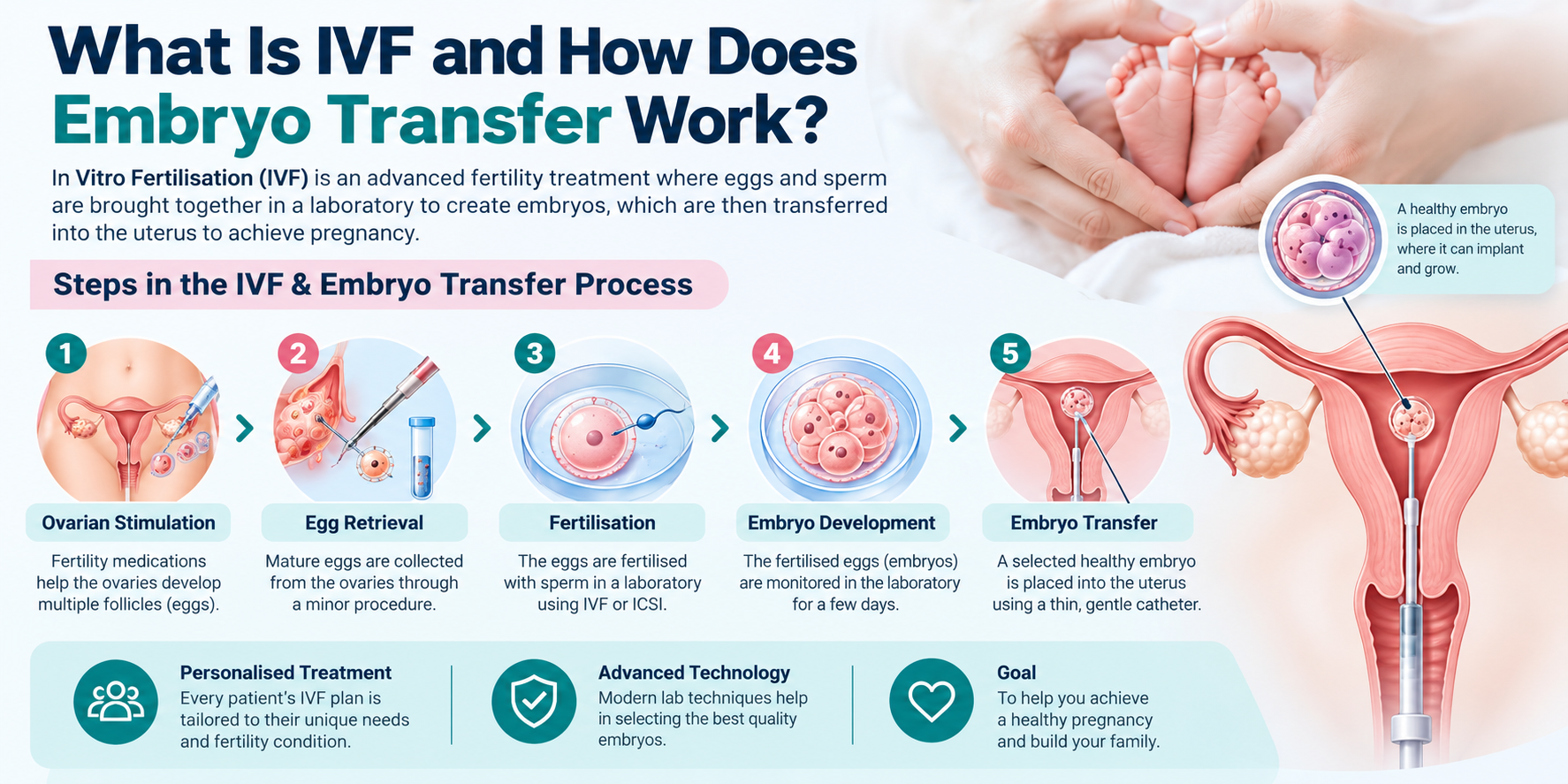
In vitro fertilisation (IVF) is an assisted reproductive technology in which eggs are collected from the ovaries and fertilised with sperm in a laboratory. The resulting embryos are monitored for development, and a suitable embryo may then be transferred into the uterus.
The main stages of an IVF treatment cycle generally include:
- Ovarian stimulation: Fertility medications help the ovaries develop multiple follicles.
- Egg retrieval: Mature eggs are collected through a medical procedure.
- Fertilisation: Eggs are fertilised with sperm using IVF or, when indicated, ICSI.
- Embryo development: Embryos are monitored in the laboratory for several days.
- Embryo transfer: A selected embryo is placed into the uterus using a thin catheter.
- Pregnancy testing: A blood or urine test is performed on the date advised by the fertility specialist.
Not every IVF cycle follows exactly the same timeline. The treatment plan depends on the patient’s age, medical history, ovarian response, embryo development, and other clinical factors.
1. Embryo Transfer Ke Kitne Din Baad Pregnancy Test Hota Hai?
One of the most frequently asked questions about IVF is: How many days after embryo transfer should you take a pregnancy test?
The answer depends on the embryo’s developmental stage, the clinic’s protocol, and the type of pregnancy test being used.
When should you take the test?
A pregnancy test after embryo transfer is commonly scheduled approximately 9–14 days after transfer, although some clinics may advise a different date based on the treatment protocol. Follow the exact testing date provided by your fertility specialist.
A blood test measuring beta-hCG (human chorionic gonadotropin) can detect the pregnancy hormone and help assess whether implantation has occurred. A home urine pregnancy test may also detect hCG, but testing too early can produce a misleading result.
Why should you avoid testing too early?
Testing before the recommended date may lead to unnecessary confusion because:
- Pregnancy hormone levels may still be too low to detect.
- Certain fertility medications, particularly an hCG trigger injection, may affect an early test result.
- A negative early result does not necessarily confirm that the treatment cycle has failed.
Important: Continue prescribed progesterone and other medications until your fertility specialist advises you otherwise. Do not discontinue treatment based on an early home pregnancy test.
Even if you experience light spotting or bleeding, contact your clinic and complete the recommended pregnancy test.
2. IVF Injections Kahan Lagte Hain Aur Kyun?
IVF injections play an important role in many fertility treatment protocols. They help control the timing of the treatment cycle, stimulate follicle development, and prepare the body for the next stages of IVF.
The type, dose, and duration of medication vary from patient to patient.
Where are IVF injections given?
Depending on the medication, IVF injections may be administered in different ways:
- Subcutaneous injections: Given under the skin, commonly in the lower abdomen or thigh, depending on the medication and instructions.
- Intramuscular injections: Given into a muscle when the prescribed medication requires this route.
Your fertility team should demonstrate the correct injection technique and explain the recommended timing.
Why are injections necessary during IVF?
Different medications serve different purposes during an IVF cycle:
- Ovarian stimulation injections: Encourage multiple follicles to develop.
- Trigger injections: Help finalise egg maturation before egg retrieval.
- Progesterone support: Helps prepare and maintain the uterine lining after embryo transfer when prescribed.
Not every patient needs the same medicines or injection schedule. Your doctor may adjust the treatment according to ultrasound findings, hormone levels, and your response to medication.
Patient tip: Never change the dose, skip a prescribed injection, or administer an unfamiliar medication without consulting your fertility clinic.
3. Fresh vs Frozen Embryo Transfer: Kya Difference Hai?
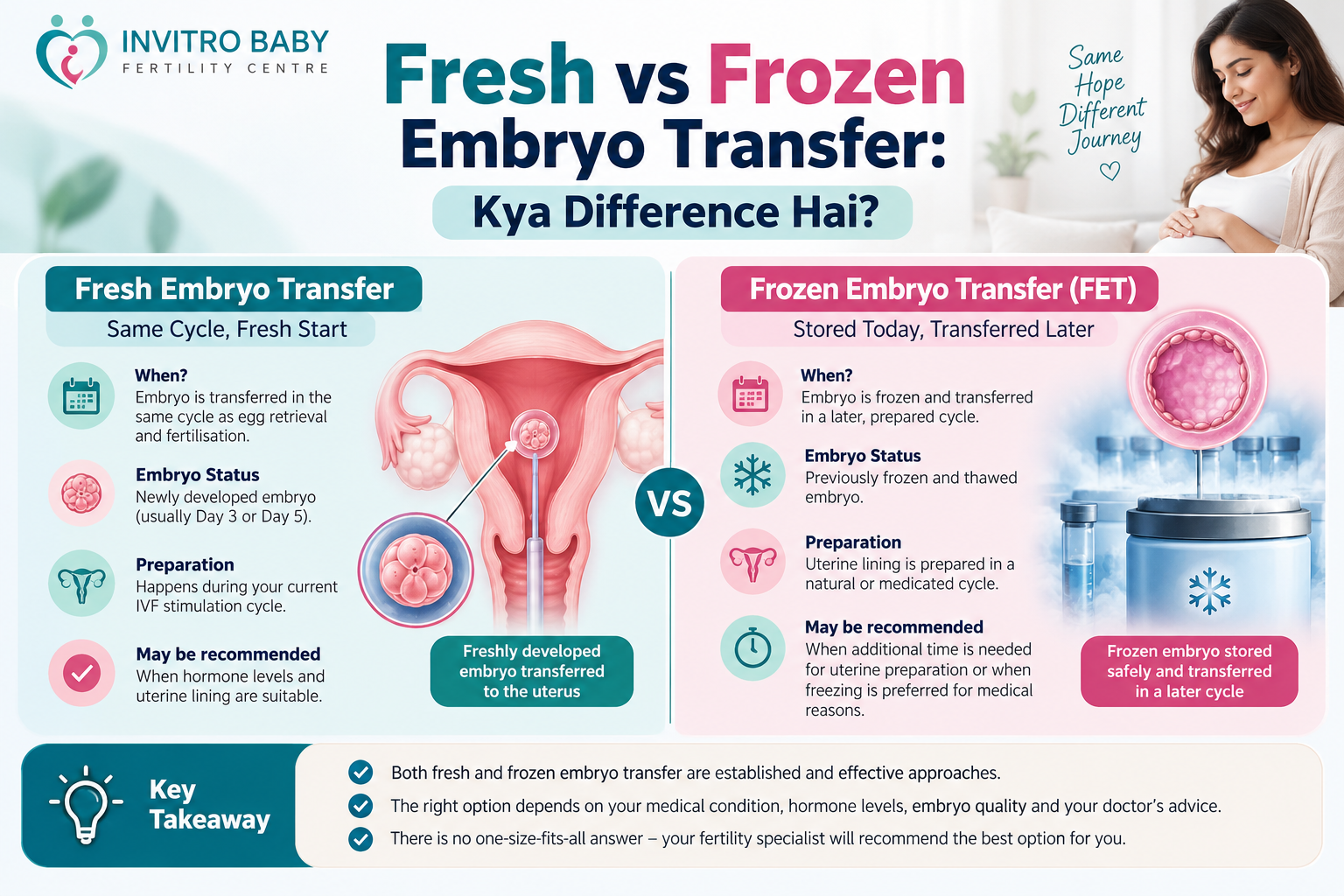
Both fresh embryo transfer and frozen embryo transfer (FET) are established approaches used in IVF treatment. The main difference is when the embryo is transferred into the uterus.
What is fresh embryo transfer?
In a fresh embryo transfer, a suitable embryo is transferred into the uterus during the same treatment cycle in which the eggs were collected and fertilised.
Your doctor may recommend this approach when the uterine lining, hormone levels, and overall clinical circumstances are suitable.
What is frozen embryo transfer?
In a frozen embryo transfer, an embryo that was previously frozen and stored is thawed and transferred during a later cycle.
The uterine lining is prepared either through a natural or modified natural cycle, when appropriate, or with prescribed hormonal medication.
Embryo freezing allows the clinic to plan the transfer at a later time. It may be recommended when additional time is needed for uterine preparation, when certain medical risks need to be managed, or when embryos are being stored following genetic testing.
Fresh vs frozen embryo transfer: Key differences
| Factor | Fresh embryo transfer | Frozen embryo transfer |
|---|---|---|
| Timing | Same treatment cycle as egg retrieval | A subsequent prepared cycle |
| Embryo status | Newly developed embryo | Previously frozen and thawed embryo |
| Preparation | Depends on the current stimulation cycle | Depends on natural or medicated cycle preparation |
| Flexibility | Timing is linked to the egg retrieval cycle | Transfer can be scheduled for a later cycle |
| Suitability | Depends on hormone levels and clinical circumstances | Depends on embryo availability and individual medical factors |
Which option is better?
There is no single answer for every patient. Fresh and frozen embryo transfer can both lead to pregnancy, and the most suitable option depends on individual circumstances.
A frozen transfer may be preferred when the doctor needs to allow hormone levels to settle or prepare the uterine lining under different conditions. However, freezing every embryo is not automatically better for everyone.
Your fertility specialist can explain the expected benefits, risks, costs, and timing of each option before recommending an approach.
4. Embryo Quality Pregnancy Outcomes Ko Kaise Affect Karti Hai?
Embryo quality in IVF is an important factor when selecting an embryo for transfer. Embryologists assess how an embryo develops and its appearance under a microscope to help estimate its potential for implantation and further development.
However, embryo grading cannot guarantee a pregnancy or predict every outcome.
How is embryo quality assessed?
Embryologists may assess several characteristics, including:
- Cell development: Whether the embryo is developing at an expected rate.
- Cell appearance and fragmentation: Features that help assess embryo development.
- Blastocyst development: Whether the embryo has reached the blastocyst stage, often around day 5 or 6, although timing can vary.
- Inner cell mass and trophectoderm: In a blastocyst, these structures contribute to the development of the fetus and placenta, respectively.
The grading system and interpretation may vary between laboratories.
Does a good-quality embryo guarantee pregnancy?
No. A good morphological grade is encouraging, but it does not guarantee implantation, an ongoing pregnancy, or live birth.
Other factors can influence the outcome, including:
- Age at egg retrieval, which is associated with the likelihood of chromosomal abnormalities in embryos.
- Embryo chromosomal status, where known.
- Uterine and endometrial factors, including the condition of the uterine cavity.
- Hormonal support and appropriate timing of embryo transfer.
- Individual reproductive and medical history.
A lower morphological grade does not automatically mean that an embryo cannot result in a pregnancy. Your embryologist and fertility specialist can interpret the grading report in the context of your treatment.
Should more than one embryo be transferred?
Not necessarily. Single embryo transfer is recommended in many clinical situations because transferring multiple embryos increases the risk of twins or higher-order multiple pregnancies, which can pose additional health risks.
The number of embryos transferred should be decided individually, taking account of embryo characteristics, age, previous treatment, and applicable clinical guidance.
5. IVF Mein Implantation Na Hone Ke Possible Reasons Kya Hain?
A common concern after an unsuccessful IVF cycle is: Why did the embryo not implant?
Implantation is a complex biological process. An embryo must continue developing and interact appropriately with the uterine lining. Sometimes implantation does not occur even when treatment has been carefully planned.
Possible factors associated with implantation failure
1. Embryo developmental or chromosomal factors
Some embryos may have developmental limitations or chromosomal abnormalities that reduce their potential to establish an ongoing pregnancy. The likelihood of chromosomal abnormalities is associated with age at egg retrieval.
2. Uterine or endometrial factors
Conditions affecting the uterine cavity, such as certain polyps, fibroids that distort the cavity, adhesions, or hydrosalpinx, may influence treatment outcomes in some patients. Not every uterine finding affects implantation, so evaluation should be guided by clinical evidence.
3. Hormonal preparation and timing
The uterine lining must be prepared appropriately for the stage of the embryo. The timing and adequacy of progesterone support may be important, particularly in programmed frozen embryo transfer cycles.
4. Individual medical and reproductive factors
Age, previous treatment history, certain medical conditions, and other reproductive factors may contribute to the overall chance of success. Often, no single clear cause can be identified.
5. Chance and biological variation
Even when embryo quality and the uterine environment appear favourable, implantation may not occur. An unsuccessful transfer does not necessarily mean that the patient or doctor did something wrong.
What happens after an unsuccessful embryo transfer?
Your fertility specialist may recommend reviewing the previous cycle before planning another attempt. Depending on your history, this review may include:
- Embryo development and laboratory reports.
- The uterine cavity and relevant imaging findings.
- Hormonal preparation and medication timing.
- Previous pregnancy and treatment history.
- Whether any additional investigation is clinically justified.
After repeated unsuccessful transfers, an individualised assessment may help determine whether a specific, treatable factor is present. Extensive testing or additional treatment add-ons are not automatically beneficial for every patient.
Important: One unsuccessful IVF cycle does not necessarily indicate recurrent implantation failure. The next steps should be based on your clinical history, the embryos transferred, and your fertility specialist’s assessment.
What Should You Ask Your Fertility Specialist Before Embryo Transfer?
Before proceeding with IVF and embryo transfer, consider discussing these questions during your consultation:
- Which embryo is recommended for transfer, and why?
- Should I have a fresh or frozen embryo transfer?
- When should I take my pregnancy test?
- Which medications should I continue after transfer, and for how long?
- What follow-up is recommended if the pregnancy test is negative?
You may also ask about the estimated treatment costs, possible complications, the number of embryos recommended for transfer, and whether any proposed additional procedure has sufficient evidence to justify its use.
Clear communication can help you understand your treatment plan and make informed decisions.
Life After Embryo Transfer: What Should You Keep in Mind?
The period after embryo transfer can feel emotionally challenging. It is natural to look for symptoms or signs that indicate whether the treatment has worked, but symptoms alone cannot confirm pregnancy.
Keep the following points in mind:
- Take prescribed medications as directed.
- Follow your clinic’s guidance regarding activity and daily routines.
- Avoid starting supplements, medicines, or alternative treatments without medical advice.
- Attend your scheduled pregnancy test and follow-up appointments.
- Seek medical advice if you develop concerning symptoms.
Prolonged bed rest is not routinely recommended after embryo transfer, and remaining in bed for days has not been shown to improve IVF outcomes. Follow your clinic’s instructions regarding activity, particularly if you have specific medical concerns.
Contact your fertility clinic promptly if you experience significant abdominal pain, heavy bleeding, or worsening symptoms. Severe pain, difficulty breathing, fainting, or other emergency symptoms require urgent medical assessment.
Frequently Asked Questions About IVF and Embryo Transfer
1. Is embryo transfer painful?
Embryo transfer is generally a brief procedure performed using a thin catheter passed through the cervix into the uterus. Many patients experience little discomfort, although some may feel mild cramping or pressure.
2. Can I walk after embryo transfer?
In most uncomplicated cases, gentle walking and ordinary daily activities are acceptable. Prolonged bed rest is not necessary solely because an embryo has been transferred. Follow your specialist’s advice about strenuous exercise and other individual restrictions.
3. Does embryo quality determine IVF success?
Embryo quality is an important consideration, but it is not the only factor. Age at egg retrieval, chromosomal status, uterine factors, medical history, and other variables also influence outcomes.
4. Is frozen embryo transfer safer or more successful than fresh transfer?
Neither approach is universally best. The appropriate choice depends on the patient’s circumstances, embryo availability, hormonal response, and medical risks. Your fertility specialist can discuss the evidence relevant to your case.
5. What happens if implantation does not occur?
Your specialist may review the previous cycle, including embryo development, transfer details, medication protocols, and relevant uterine factors. Further tests or treatment changes should be recommended only when clinically appropriate.
6. When can an ultrasound confirm pregnancy after IVF?
After a positive pregnancy test, an ultrasound is scheduled at the appropriate time to confirm the location and development of the pregnancy. The timing varies according to the treatment timeline and clinical circumstances.
Understand Your IVF Journey with Expert Guidance
Every fertility journey is different. Understanding the IVF process, embryo transfer procedure, pregnancy test timing, embryo quality, and possible reasons for implantation failure can help you approach treatment with clearer expectations.
At Invitro Baby Fertility Centre, patients can discuss their fertility concerns, treatment options, and follow-up requirements with a fertility specialist. An individual assessment is important because no single IVF protocol or embryo transfer approach is suitable for everyone.
If you are planning IVF or have questions about a previous embryo transfer, consider scheduling a consultation to discuss your medical history and appropriate next steps.
Book a fertility consultation to understand your IVF and embryo transfer options.
Visit: https://invitrobaby.in/
Medical disclaimer: This article is intended for general educational purposes and does not replace an individual medical consultation, diagnosis, or treatment plan. IVF outcomes vary from patient to patient. Please consult a qualified fertility specialist for personalised medical advice.